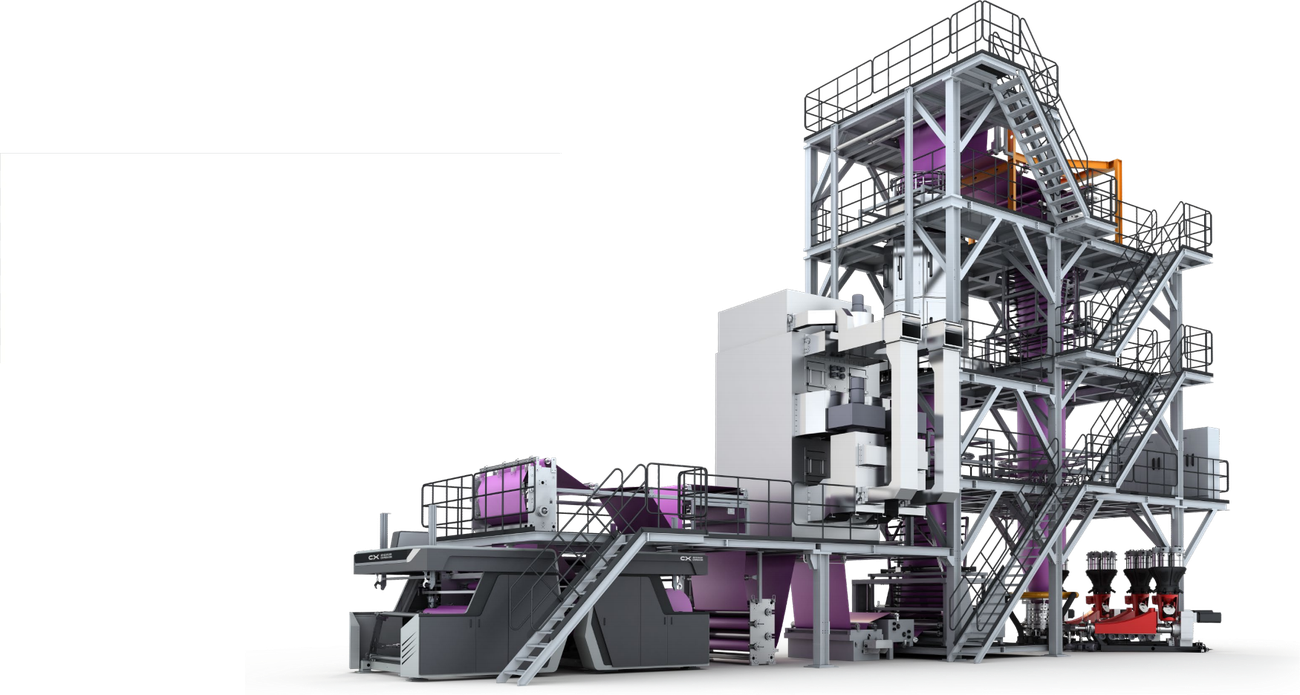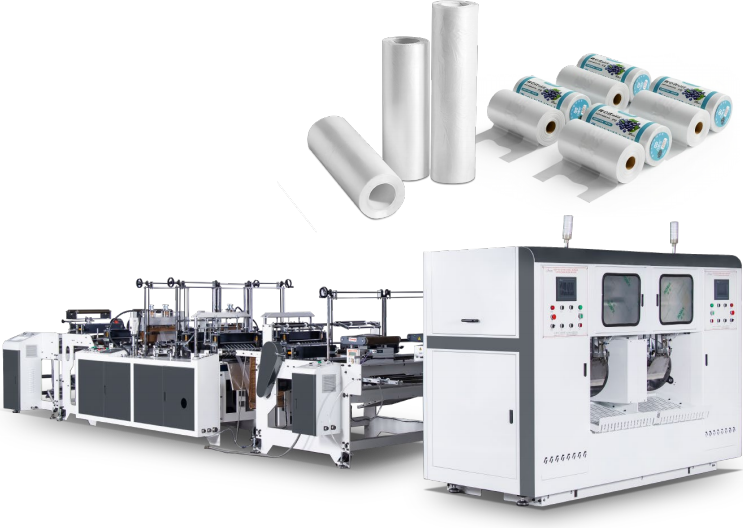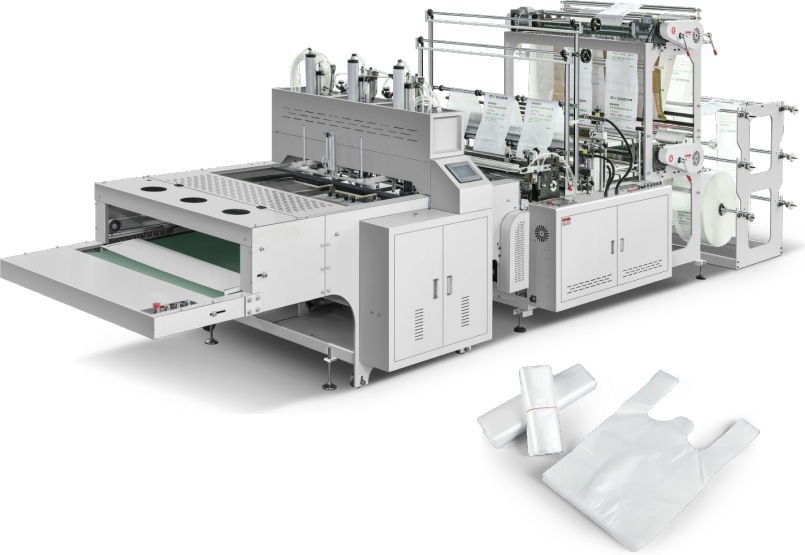
PBAT+PLA blends are increasingly specified for compostable shopping bags, produce bags, and food-service liners. Running these materials on a standard heat-seal converter requires a handful of process adjustments — ignoring them leads to weak seals, film sticking to the bar, or premature blade wear.
Sealing temperature
PBAT softens at a lower temperature than LDPE. Start with seal-bar temperature 15–20 °C below your LDPE setting and step up in 5 °C increments while watching seal peel strength. Overheating causes the film to drag on the bar and creates burn-through on thin gauges.
Dwell time
PLA raises the crystallisation temperature of the blend, which means the seal needs slightly longer dwell time to reach full strength. On the T-PRO platform, increase dwell by 10–15 % relative to LDPE at the same gauge.
Cooling bar pressure
A cooling bar opposite the seal bar is strongly recommended. Without active cooling, the seal remains soft and can peel under the tension of the haul-off. Minimum air-gap cooling: 30 mm, 0.4 bar.
Blade setup
PBAT+PLA blends are stiffer and slightly more abrasive than LDPE. Use a ceramic-coated blade and expect 15–20 % shorter blade life. Do not use a serrated blade on these materials — it creates micro-tears that propagate during use.
Line speed
Run 10–15 % slower than your LDPE baseline until you have confirmed seal strength at each station. Once dialled in, the T-PRO can reach 260 pcs/min on a 50-micron PBAT+PLA film without seal compromise.
Our applications team can provide a process setup sheet specific to your film supplier's resin blend. Get in touch via the contact page.