1. Executive Summary & Co-Extrusion Industry Evolution
Co-extrusion technology has revolutionized flexible packaging production across global markets. By combining different resin formulations through a multi-manifold die head, packaging manufacturers can produce films with tailored mechanical strength, optical clarity, heat-seal temperature windows, and gas barrier properties impossible to achieve with monolayer extrusion lines.
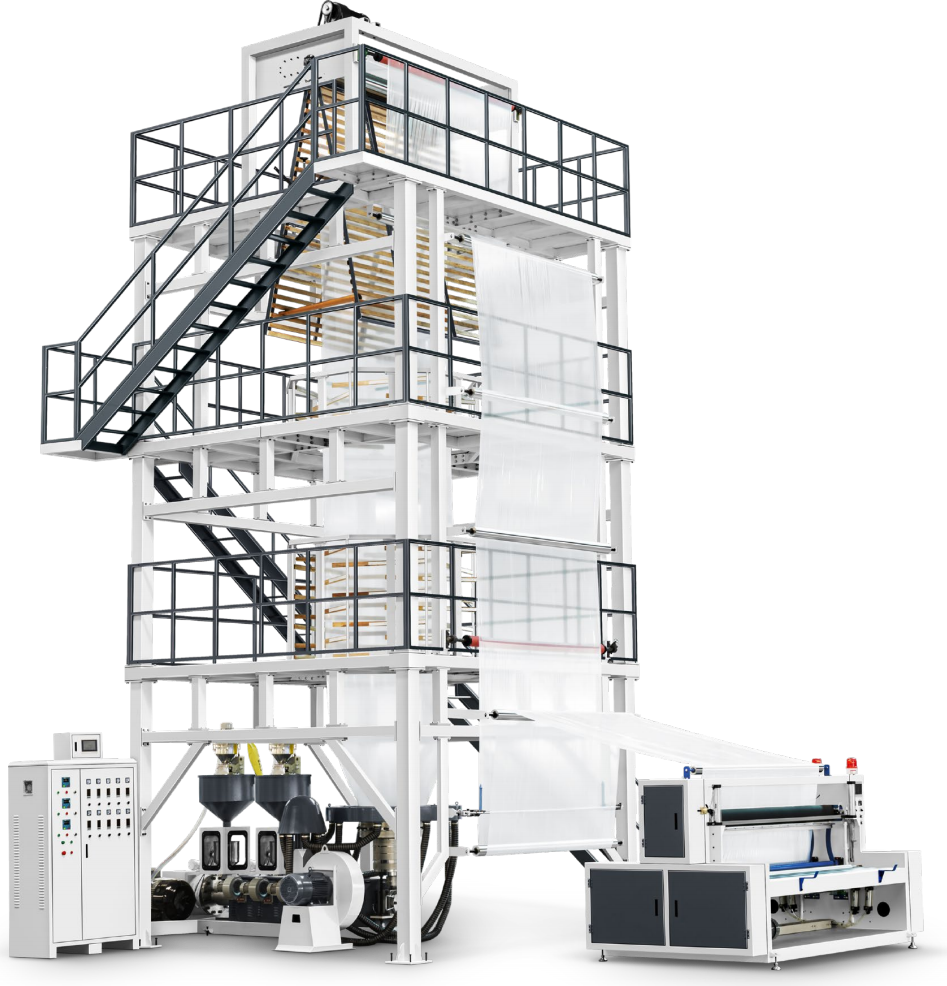
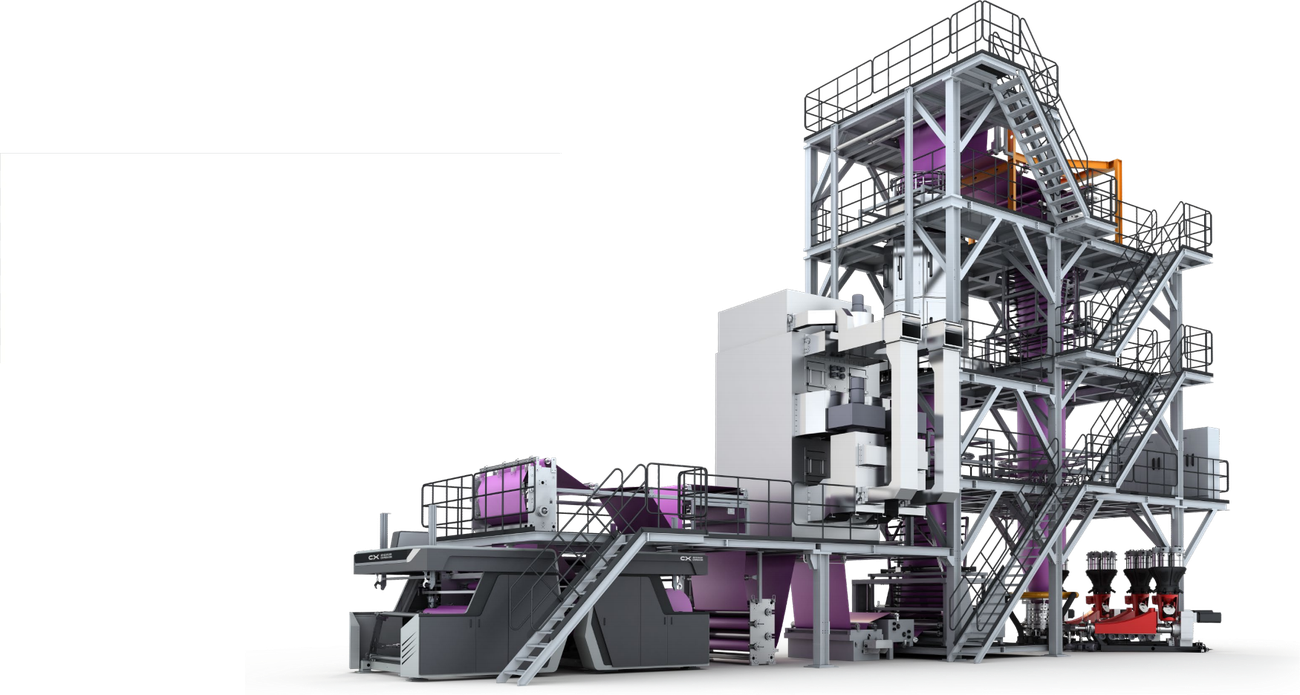
In modern flexible converting plants, the two primary co-extrusion configurations are 3-layer ABA systems and 5-layer ABCDE high-barrier lines. Understanding the mechanical engineering differences, polymer melt distribution dynamics, capital investment thresholds, and long-term operating costs is essential for plant owners seeking to optimize output yield and profit margins.
2. Mechanical Architecture & Screw L/D Ratio Dynamics
Extruder screw design dictates polymer plasticization quality, melt temperature uniformity, and throughput per revolution. In 3-layer ABA systems, two extruders supply three layers: Screw A feeds the inner and outer skin layers (accounting for 30% to 40% of total film thickness), while Screw B feeds the core layer (accounting for 60% to 70% of film thickness).
Conversely, 5-layer ABCDE lines employ five dedicated extruder screws, typically configured with 30:1 or 32:1 L/D ratios and barrier mixing sections. This architecture enables independent temperature regulation across five distinct polymer streams. A typical 5-layer melt distribution matrix includes:
- Layer A (Outer Sealant Layer): LLDPE/mLLDPE for low-temperature heat sealing and anti-tack slip properties (15% thickness).
- Layer B (Tie Layer): Maleic anhydride grafted polyolefin adhesive resin for bonding polar barrier polymers (10% thickness).
- Layer C (Core Barrier Layer): EVOH or PA (Nylon) for oxygen, moisture, and aroma barrier protection (20% thickness).
- Layer D (Tie Layer): Adhesive tie layer matching Layer B for symmetrical structural adhesion (10% thickness).
- Layer E (Inner Contact Layer): Food-grade HDPE/LDPE for mechanical puncture resistance and food contact compliance (45% thickness).
3. Polymer Rheology & Spiral Die Head Mandrel Geometry
Melt flow stability within the die head assembly determines film gauge consistency and eliminates inter-layer flow instabilities (such as zig-zag interfacial shear melt fracture). Ashal Machinery utilizes 3D Computational Fluid Dynamics (CFD) software to design spiral distribution channels with logarithmic depth reduction.
In 5-layer ABCDE die heads, heating zones are individually controlled using multi-channel PID temperature modules. Thermal isolation rings between die modules prevent heat transfer from high-temperature nylon layers (typically 240°C–260°C) to heat-sensitive EVOH layers (200°C–220°C), guaranteeing zero resin degradation or yellowing during prolonged manufacturing runs.
4. Raw Material Cost Optimization & ABA Fillers
The primary financial advantage of 3-layer ABA lines lies in raw material cost reduction. Because Screw B feeds only the core layer, processors can incorporate high percentages of low-cost calcium carbonate (CaCO3) masterbatch (up to 40%–50%) or post-industrial recycled PE flakes into the middle B layer without compromising the glossy aesthetic or printability of the virgin A skin layers.
For example, in a standard shopping bag manufacturing facility producing 100 metric tons of film per month, running an ABA configuration with 30% recycled material in the core layer yields monthly resin savings exceeding $18,000 USD compared to monolayer virgin extrusion.
5. Energy Consumption & Utility Requirements
Energy consumption per kilogram of extruded resin (kWh/kg) is a critical benchmark for plant profitability. Modern Ashal co-extrusion lines utilize high-efficiency IE4 AC motor drives paired with ceramic heating bands and thermal insulation jackets, achieving power ratings under 0.28 kWh per kg of film.
- 3-Layer ABA Line (1200mm): Total power hookup ~110 kW; water chiller requirement 12 m³/h at 15°C.
- 5-Layer ABCDE Line (2200mm): Total power hookup ~500 kW; internal bubble cooling (IBC) blower capacity 18,000 m³/h; water chiller requirement 35 m³/h.
6. Strategic Buying & Investment ROI Analysis
Choosing between ABA and ABCDE lines depends on target product application. ABA lines deliver immediate payback (6 to 10 months) for carrier bags, courier mailing envelopes, and trash liners. 5-layer ABCDE lines require higher initial capital expenditure but unlock lucrative high-margin markets in vacuum food pouches, medical barrier films, and agricultural multi-year greenhouse sheeting.